Today’s patients make fast decisions based on what they see online—often before they ever contact your office. Their first impression? Not your years of experience or spotless facility, but your public reviews. When people search for a provider, your ratings and responses are right there, front and center.
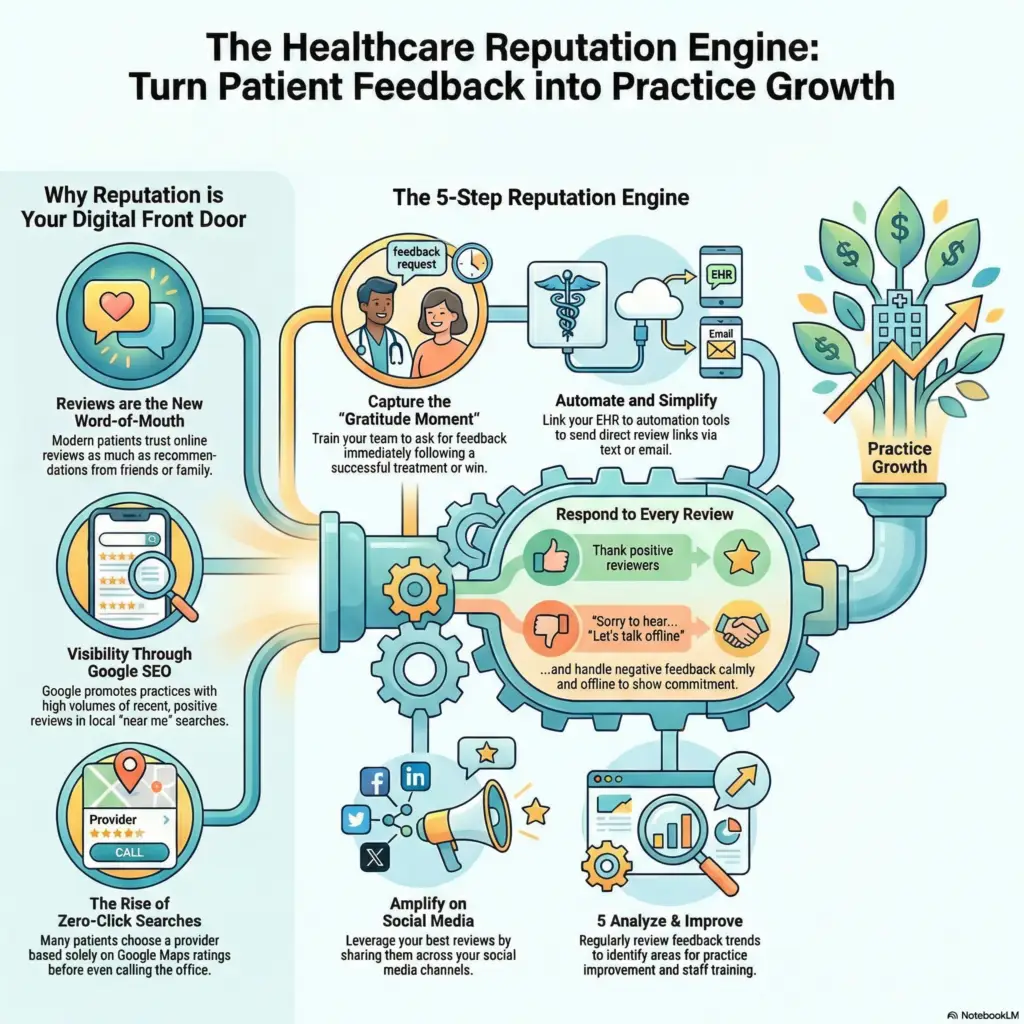
- Social proof counts: Modern patients often trust online reviews just as much as recommendations from friends or family. A steady flow of honest feedback builds credibility before you ever say a word.
- Zero-click searches: Many new patients are deciding between local options using only what shows up on Google Maps. That’s your digital front door—you want it to shine.
- Google rewards reputation: The more positive reviews you collect—and the more recent they are—the more likely you are to show up when patients search for help in your specialty.
If your reviews are thriving, your practice grows on autopilot. If they’re stale or few, you’re easy to overlook.
The Real Reason Most Practices Struggle With Reviews
Let’s be honest: Reviewing isn’t easy. For many healthcare teams, the process is uncomfortable.
- It feels awkward: Asking for a review can feel like fishing for compliments, or even risking criticism. No one wants to sound desperate or put a patient on the spot.
- Fear of the negative: Every practice worries that a rare bad day will end up as a loud, negative review that lives forever online.
- It’s easy to forget: Practices get busy. The team remembers to ask… until you’re overwhelmed, then it slips through the cracks. Months pass with no new feedback.
- No system, no momentum: Without a built-in process, reviews trickle in at random. That’s not enough to fuel growth or build trust.
How to Build a Reputation Engine (Step-by-Step Guide)
If you want reviews to work for you—not against you—stop relying on luck or the occasional ask. Put a system in place. Here’s the formula top practices use, and you can too:
1. Ask at the Right Moment
Patients are most willing to share positive feedback right after a win—a successful visit, a thoughtful conversation, or relief after treatment. Train your team to spot those “gratitude moments.” That’s when to ask.
2. Automate the Request
Don’t leave it to memory. Pair your practice management system or EHR with an automation tool (like Powr Practice, or even a simple email system). Set it up so every satisfied patient automatically receives a text or email, thanking them and inviting their feedback after each appointment.
3. Make It Easy
The fewer the clicks, the higher your chance of success. Include a direct link to your Google profile or another review site right in your message. One tap should get them started—no searching, no hoops. If you serve a specific community, link to the platform that matters most to them.
4. Respond Thoughtfully—Every Time
- Positive reviews: Always thank patients. Be specific and personal if you can. A simple, “Thanks, Anna. We love being a part of your health journey!” leaves a lasting impression.
- Negative reviews: Respond quickly, calmly, and offline when possible. Acknowledge concerns, invite further conversation privately, and show your commitment to making things right. Never argue or get defensive; your response is for future patients as much as the reviewer.
5. Review and Refine
Track your review volume, rating, and recency. Set aside time monthly to check what’s working. If a step gets skipped, fix it. If patients ignore your requests, try tweaking the timing or wording.
What You Gain When You Systemize Reputation
- New patients—automatically: Glowing feedback builds trust and lowers barriers for people deciding to book with you.
- Visible, lasting trust: Each positive review is a public vote of confidence. The volume and consistency say more than your website ever could.
- Higher rankings, more visibility: Google promotes practices with active, positive reviews. You win more “near me” searches and show up first for the patients you want.
- Less stress, more control: A steady stream of honest feedback drowns out the occasional critical voice and flips reputation risk into a growth driver.
Ready to Build Your Own Reputation Engine?
A stellar reputation isn’t something you wish for—it’s something you build, day by day, with the right system in place. If your current approach is manual or random, now is the time to level up.
Building trust isn’t magic. It’s a method. Plug in your Reputation Engine—and let your best patients do the talking.